 how-to
How to Organize Retirement Documents: A Step-by-Step Guide
Table of Contents
- Why Organizing Retirement Documents Matters
- Create a Retirement Document Checklist
- How Long to Keep Tax Records and Other Filings
- Digital vs. Paper Retirement Files: Which System Works Best
- What to Include in a Legacy Binder for Your Heirs
- Organize Your Documents by Category and Timeline
- Protect Your Financial Information With Security Best Practices
- Maintain Your System and Prepare for the Future
- Frequently Asked Questions
Last Updated: August 14, 2026
Why Organizing Retirement Documents Matters
Your retirement documents are the foundation of financial security for you and your family. When scattered across drawers, filing cabinets, and digital accounts, they create real problems: missed deadlines, overlooked benefits, and confusion for whoever manages your affairs if something happens to you.
Most people accumulate financial records over decades without a system. Tax returns from 2015 sit next to insurance policies from 2008. When you need something quickly, or when your heirs settle your estate, this chaos costs time and money.
At New Insight Financial, we help clients consolidate and organize their financial lives so everything is accessible, secure, and clear. The process starts with understanding what documents matter most and how to structure them for both current use and future access by your beneficiaries.
Create a Retirement Document Checklist
Before you can organize anything, you need to know what you're looking for. A retirement document checklist ensures you don't miss critical files.
Essential Financial Records to Gather
Start by gathering all account statements from the past 12 months: bank accounts, investment accounts, brokerage statements, and money market accounts. Include old 401(k) plans, IRAs, and pension statements from previous employers. Many retirees discover forgotten accounts during this process.
Request your Social Security statement from the official government website to verify your earnings history and projected benefits. This document is essential for income planning.
Collect all insurance-related documents: life insurance policies, disability insurance, long-term care insurance, and annuities. These files should show policy numbers, coverage amounts, and beneficiary designations.
Gather loan and mortgage documents if you carry any debt, including the original loan agreement, current statements, and payoff schedules. Include property deeds and title documents.
Legal and Estate Planning Documents
Collect your will, trust documents, power of attorney agreements, living will, and healthcare directive. These estate planning documents are legally binding and essential for your heirs to locate.
Gather beneficiary designation forms from all retirement accounts, insurance policies, and investment accounts. Beneficiary designations often override what your will states, so keeping them current and accessible matters enormously.
Include any prenuptial or postnuptial agreements if applicable.
How Long to Keep Tax Records and Other Filings
The IRS generally recommends keeping tax returns and supporting documentation for at least three years from the filing date. If you underreport income by 25 percent or more, keep records for six years. If you never file a return or file a fraudulent one, there's no time limit.
For retirement accounts, keep beneficiary designation forms permanently. The same applies to estate planning documents like wills and trusts.
Investment records should be retained for at least three years after you sell an investment, since cost basis affects your tax liability. Keep mortgage documents for at least three years after you pay off the loan. Property records should be retained indefinitely.
Digital vs. Paper Retirement Files: Which System Works Best
The most effective approach combines both digital and physical filing, with each serving a specific purpose.
Building a Secure Digital Vault
Digital storage offers accessibility and security advantages that paper files cannot match. You can access documents from anywhere, share them securely with your spouse or advisor, and back them up automatically.
A secure digital vault starts with choosing the right platform. Look for services that offer encryption, two-factor authentication, and the ability to grant access to designated beneficiaries. Organize files into categories: tax documents, insurance, investments, property records, and legal documents.
New Insight Financial offers complimentary access to the Generational Vault®, a secure online storage solution designed specifically for retirement and estate documents. This tool lets you centralize your financial records and prepare them for your heirs without managing multiple platforms.
Upload documents in their original format when possible. PDFs work well for most financial statements and legal documents. Set up a system for adding new documents regularly, when you receive updated statements or renewal notices, add them to your digital vault immediately.
Maintaining Physical Filing Systems
Some documents benefit from physical storage, particularly originals of legal documents like wills and deeds. Use an accordion file or filing cabinet to organize physical documents, labeling each section clearly. Within categories, arrange documents chronologically with the most recent on top.
Store your physical filing system in a secure location like a home safe or safe deposit box. Keep a physical inventory list of what's stored where, updated annually and stored both in your digital vault and with your attorney or trusted advisor.
What to Include in a Legacy Binder for Your Heirs
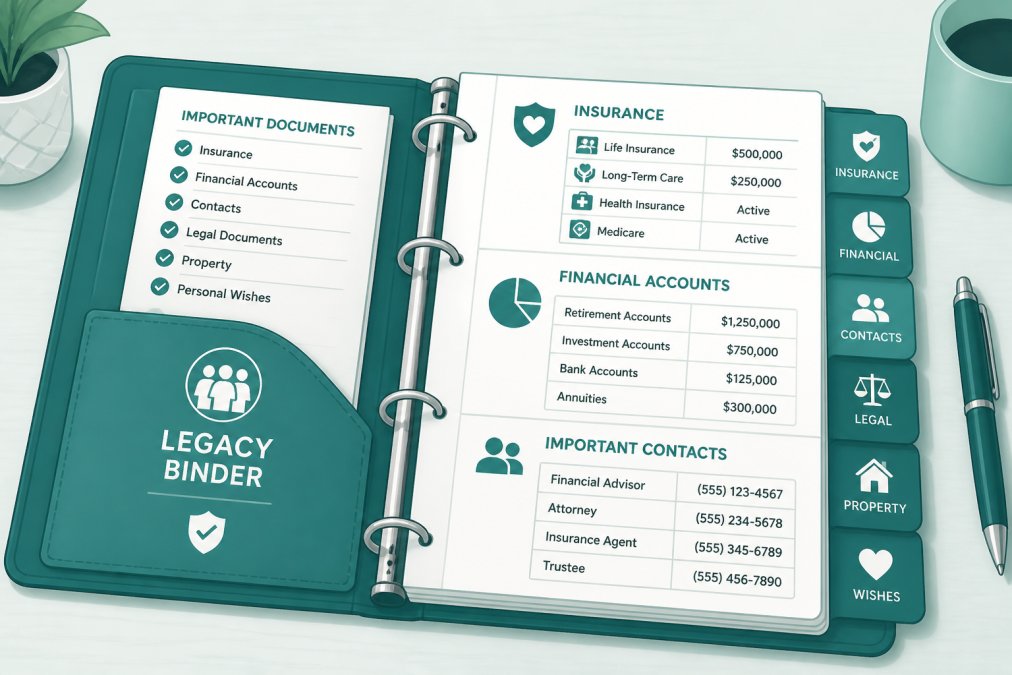
A legacy binder serves as the instruction manual for your heirs. Start with a summary page listing all financial accounts, including account numbers, institutions, and current balances. Include login credentials for digital accounts, stored securely using a password manager.
Add a section with contact information for key professionals: your financial advisor, attorney, accountant, and insurance agent. Include copies of important legal documents: your will, trust, power of attorney, and healthcare directive.
Create a section listing all insurance policies with policy numbers, coverage amounts, and claim procedures. Add a personal information section with your Social Security number, date of birth, and military service records if applicable. Include information about any memberships, subscriptions, or recurring payments that need to be canceled or transferred.
Write a letter to your heirs explaining your financial philosophy, major decisions you've made, and any special circumstances they should know about. This personal context helps them understand your choices and avoid making hasty changes to your financial arrangements.
Organize Your Documents by Category and Timeline
Step 1: Gather All Documents in One Location
Set aside a weekend and collect documents from every drawer, file, cabinet, and digital folder where you've stored financial information. This gathering phase often reveals surprises like old 401(k) statements or dormant investment accounts. Create a temporary workspace where you can spread out documents and group them loosely by type.

Step 2: Sort Into Clear Categories
Sort documents into broad categories: tax documents, insurance policies, investment statements, bank statements, legal documents, property records, and healthcare information. Create subcategories if you have a large volume in any category. Keep only the most recent version of duplicates.
Step 3: Purge and Shred Outdated Records
Reference your retention schedule to determine what can be safely destroyed. Shred documents containing sensitive information like Social Security numbers or account numbers. Keep one copy of important tax returns and supporting documentation. Be more conservative with legal documents, keep original wills, trusts, deeds, and insurance policies indefinitely.
Step 4: Label and File Chronologically
Arrange documents chronologically with the most recent on top. Use clear labels for each file folder including the category name and date range. If using a physical filing system, place folders in your filing cabinet in order with dividers separating major categories.
For your digital system, mirror this organization by creating folders matching your physical system. Upload documents in the same chronological order.
Protect Your Financial Information With Security Best Practices
If you use a digital vault, enable two-factor authentication on your account. Use a strong, unique password combining uppercase and lowercase letters, numbers, and special characters.
For physical documents, store them in a secure location like a home safe or safe deposit box. Keep the key or access information in a location your spouse or designated executor knows about. Don't store passwords with the physical documents themselves.
Consider using a password manager to store login credentials for digital accounts. This approach is more secure than writing passwords on paper. Review your document storage system annually, updating files with new statements and removing outdated information.
If you work with a financial advisor, ask whether they can help you organize and store copies of important documents. Many advisors can help ensure your heirs know where to find critical information.
Maintain Your System and Prepare for the Future
Organizing your retirement documents is not a one-time project. Schedule an annual review of your document system, setting a specific date each year when you spend an hour updating your files. Add new statements, remove outdated documents, and verify that your digital and physical systems are in sync.
As your life circumstances change, update your documents accordingly. If you move, update your address on all accounts. If you get married or divorced, update beneficiary designations immediately. If you receive an inheritance or make a major purchase, add relevant documentation to your system.
Share your organizational system with your spouse and executor. Walk them through your digital vault, show them where physical documents are stored, and explain your filing system. Consider creating a video walkthrough of your document organization system, explaining where documents are stored and how to access digital files.
Working with a financial advisor helps ensure your document organization supports your broader retirement strategy. At New Insight Financial, we help clients organize their financial documents as part of comprehensive retirement planning, ensuring your documents reflect your current financial situation and align with your income and risk management strategies.
Organizing your retirement documents takes time upfront, but it provides peace of mind and protects your family's financial future. A well-organized system ensures you can access information when you need it, helps your advisor provide better guidance, and makes it significantly easier for your heirs to settle your estate. Start with your checklist, sort documents systematically, and maintain your organization with annual reviews.
Frequently Asked Questions
What financial records should I prioritize when organizing retirement documents?
Start with your most critical fiduciary files: Social Security statements, Medicare information, investment statements, retirement account statements (401(k), IRA), life insurance policies, property records, and tax returns. These form the foundation of your financial records. Next, gather loan documents, banking information, and emergency contact details. Organize them in a centralized location where you and your executor can access them easily. This prevents duplicating effort and ensures nothing gets lost during transitions.
How long should I keep tax returns and financial records after retirement?
The IRS generally recommends keeping tax returns for at least three years from the filing date. However, keep them for seven years if you report business income or claim significant deductions. For financial records related to property, investments, or loan documents, maintain them for seven years after the transaction closes. Investment statements and brokerage records should be kept for at least seven years to support tax reporting. Once records reach their retention deadline, shred them to protect sensitive information and reduce clutter.
Should I use digital or paper files for organizing my retirement documents?
A hybrid approach works best for most retirees. Use secure cloud storage with two-factor authentication for digital assets, passwords, and frequently accessed documents. This provides accessibility and automatic backups. Keep original paper documents (deeds, insurance policies, legal documents) in a fireproof filing cabinet or safe deposit box. The combination ensures you have both convenience and security. Digital files are easier to share with heirs, while paper originals provide legal proof when needed. Many retirees use the Generational Vault® or similar secure platforms to centralize digital access while maintaining physical backups.
What documents must I include in a legacy binder for my heirs?
Your legacy binder should contain: a list of all financial accounts with institution names and contact information, usernames and password-protected access instructions, life insurance policy details and beneficiary designations, property records and deed locations, investment statements and account balances, Social Security and Medicare information, tax return summaries for the past three years, and a list of professional advisors (attorney, accountant, financial planner). Include emergency contacts and instructions for accessing your digital assets. This preparation helps your executor settle your estate efficiently and ensures your beneficiaries understand your financial situation.